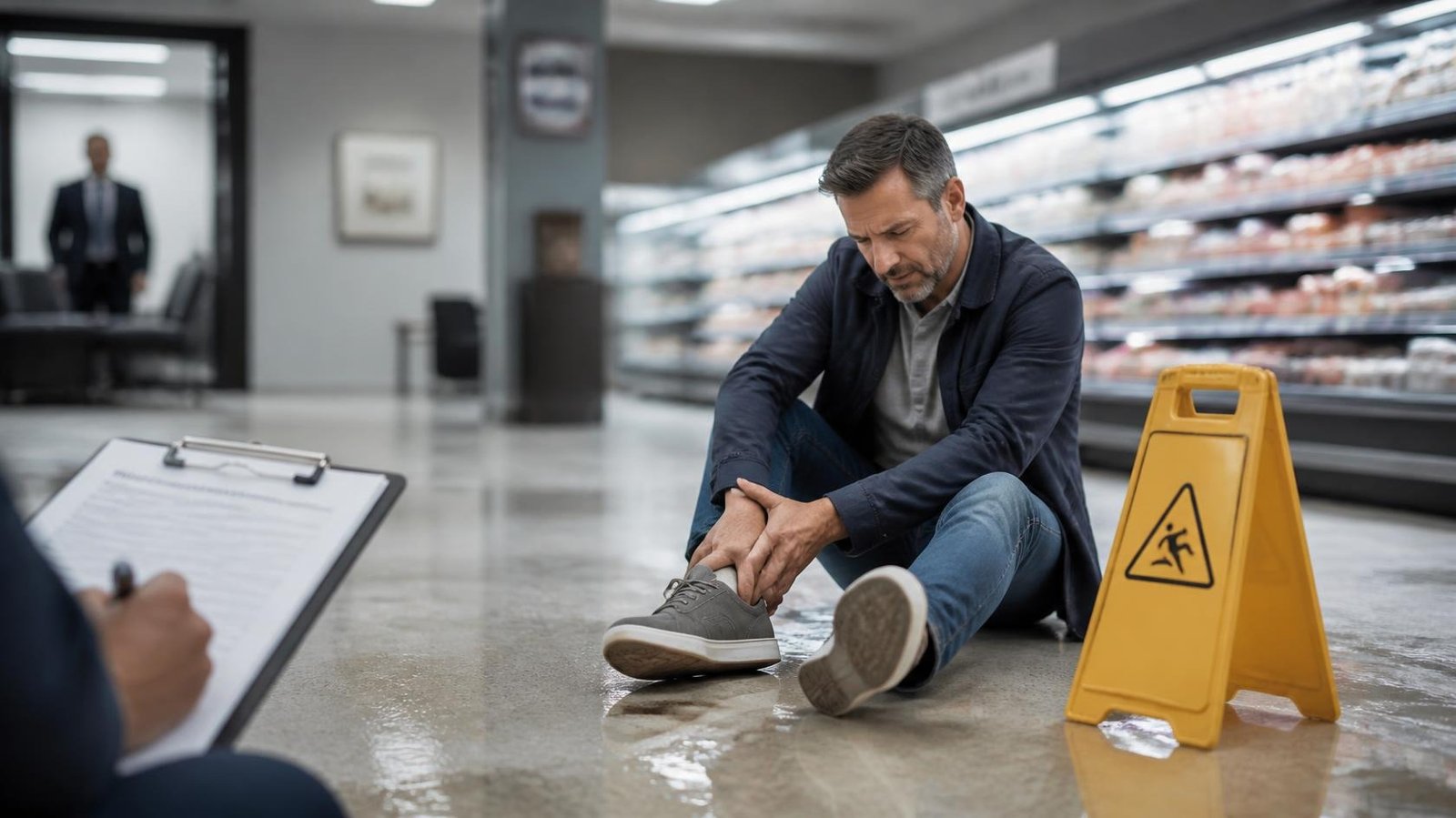

A slip and fall accident can happen almost anywhere—inside a grocery store, on a sidewalk, in an apartment building, at a restaurant, in a parking lot, or even at a workplace. What may seem like a simple fall can result in serious injuries, medical expenses, lost income, and a difficult recovery.
If a dangerous condition contributed to your accident, it is important to understand what happened, document the circumstances, and learn whether another party may have legal responsibility.
This guide explains common slip-and-fall hazards, injuries, evidence to preserve, potential liability, compensation, and when speaking with a personal injury lawyer may be appropriate.
What Is a Slip-and-Fall Accident?
A slip-and-fall accident occurs when a person loses their balance because of a slippery, uneven, defective, or otherwise hazardous surface and falls.
Common examples include:
- Wet or recently mopped floors
- Spilled drinks or food
- Ice or snow
- Uneven sidewalks
- Broken pavement
- Loose carpeting or rugs
- Poorly maintained stairs
- Missing or damaged handrails
- Poor lighting
- Cluttered walkways
- Potholes
- Uneven flooring
- Leaking pipes or ceilings
Not every fall creates a legal claim. Generally, the circumstances surrounding the hazard, the property owner’s or occupier’s responsibilities, notice of the dangerous condition, and the applicable state law can all affect whether a person may have a valid premises-liability claim.
For general information about personal injury claims, you can also visit Personal Injury Lawyer HQ.
Why Slip-and-Fall Accidents Can Be Serious
A fall can cause much more than temporary discomfort.
Depending on the circumstances, a person may suffer:
- Broken bones
- Wrist or arm fractures
- Ankle injuries
- Knee injuries
- Hip fractures
- Back and spinal injuries
- Shoulder injuries
- Sprains and strains
- Head injuries
- Concussions
- Traumatic brain injuries
- Soft-tissue injuries
Falls can be particularly serious for older adults. According to the CDC, falls are the leading cause of injury among adults age 65 and older. The CDC reported that more than 14 million older adults—about one in four—report falling each year.
Because symptoms are not always immediately obvious, someone who falls should consider getting appropriate medical attention, particularly after a head impact or significant pain.
Common Causes of Slip-and-Fall Accidents
1. Wet or Slippery Floors
Water, cleaning products, spilled beverages, grease, or other liquids can make floors dangerous.
Businesses such as grocery stores, restaurants, shopping centers, and hotels may have frequent opportunities for spills to occur.
Whether a property owner or business can be held responsible may depend on factors such as how long the dangerous condition existed and whether the responsible party knew or reasonably should have known about it.
2. Uneven Sidewalks
Cracked or raised sidewalks can create tripping hazards.
A property owner, municipality, contractor, or another party may potentially have responsibilities depending on who controlled or maintained the area and the applicable local law.
3. Poorly Maintained Stairs
Broken steps, loose stair components, missing handrails, inadequate lighting, or slippery stair surfaces can contribute to serious falls.
Stair falls can be especially dangerous because a person may fall down multiple steps and suffer injuries to several parts of the body.
4. Ice and Snow
Winter weather creates another common source of slip-and-fall accidents.
Property owners and occupants may have responsibilities regarding snow and ice removal, but the specific duties and legal rules vary considerably by location.
5. Poor Lighting
A dangerous condition may be difficult to identify when an area is poorly illuminated.
Parking garages, stairwells, hallways, sidewalks, and building entrances can become particularly hazardous when lighting is inadequate.
6. Loose Rugs and Flooring
Loose mats, torn carpets, damaged flooring, and raised edges can cause someone to trip unexpectedly.
Photographs showing the condition of the flooring immediately after an accident may become important evidence.
7. Cluttered Walkways
Boxes, merchandise, cables, equipment, or other objects left in walking areas can create hazards.
Businesses and property managers should generally take reasonable steps to keep walking surfaces safe and accessible.
OSHA specifically identifies wet floors, spills, and clutter as hazards that can contribute to slips, trips, and falls in workplaces.
Where Do Slip-and-Fall Accidents Commonly Happen?
Slip-and-fall accidents can occur in many different locations, including:
- Grocery stores
- Shopping malls
- Restaurants
- Hotels
- Apartment buildings
- Office buildings
- Hospitals
- Parking lots
- Parking garages
- Public sidewalks
- Private homes
- Construction areas
- Workplaces
- Schools
- Entertainment venues
The location of the accident can matter because different laws, ownership structures, insurance policies, and duties may apply.
Who May Be Responsible for a Slip-and-Fall?
Determining liability after a slip-and-fall accident is not always straightforward.
Potentially responsible parties can include:
- Property owners
- Business owners
- Property managers
- Landlords
- Tenants or commercial occupants
- Maintenance companies
- Snow and ice removal contractors
- Construction companies
- Government entities
However, simply falling on someone else’s property does not automatically mean that the property owner is legally responsible.
A claim may depend on whether a dangerous condition existed, whether the responsible party caused the condition, whether they knew or should reasonably have known about it, whether they had an opportunity to correct it or provide a warning, and whether other factors contributed to the accident.
State premises-liability laws can also differ.
What Is “Notice” in a Slip-and-Fall Case?
One important issue in many premises-liability cases is notice.
There are generally two types of notice that may become relevant:
Actual Notice
Actual notice means the responsible party knew about the dangerous condition.
For example, suppose a store employee sees a large liquid spill but leaves it on the floor without cleaning it or warning customers. Evidence of the employee’s knowledge could be relevant.
Constructive Notice
Constructive notice generally concerns circumstances where the dangerous condition existed long enough, or was otherwise apparent enough, that the responsible party may reasonably have been expected to discover it.
The exact legal standard depends on the jurisdiction.
This is one reason photographs, surveillance footage, incident reports, witness information, and maintenance records can be important.
What Should You Do After a Slip-and-Fall Accident?
Taking appropriate steps after an accident can help protect your health and preserve information about what happened.
1. Seek Medical Attention
Your health should come first.
Some injuries may not be immediately obvious. Head, back, neck, and internal injuries can sometimes require medical evaluation even when symptoms initially seem manageable.
2. Report the Accident
If the accident occurred at a business or other property, notify the appropriate manager, owner, security officer, or property representative.
Ask whether an incident report is being prepared and keep a record of what you reported.
3. Take Photographs
If you can safely do so, photograph:
- The dangerous condition
- The surrounding area
- Your footwear
- Visible injuries
- Damaged clothing
- Lighting conditions
- Nearby warning signs
- The overall location
Try to photograph the condition from multiple angles.
4. Collect Witness Information
If anyone saw the accident, consider obtaining their name and contact information.
Independent witnesses may be able to provide useful information about the condition of the property and what occurred.
5. Preserve Relevant Evidence
Do not immediately throw away shoes or clothing involved in the accident.
Depending on the circumstances, these items may help document what happened.
6. Keep Medical Records
Keep copies of:
- Medical bills
- Prescriptions
- Diagnostic reports
- Doctor’s instructions
- Therapy records
- Transportation expenses
- Insurance correspondence
7. Avoid Speculating About Fault
When discussing the accident with an insurance company or property representative, stick to factual information.
Avoid guessing about facts you do not know.
What Evidence Can Help a Slip-and-Fall Claim?
Evidence can play an important role in establishing what happened.
Potential evidence includes:
Photographs and Videos
Photos can show the dangerous condition, its location, and surrounding circumstances.
Surveillance Footage
Many stores, businesses, apartment buildings, and parking facilities use security cameras.
If surveillance footage exists, preserving it quickly may be important because some systems automatically overwrite older recordings.
Witness Statements
People who saw the accident or observed the hazardous condition may provide valuable information.
Incident Reports
Businesses sometimes create accident or incident reports after a customer or visitor falls.
Maintenance Records
Cleaning schedules, inspection records, repair requests, and maintenance logs may help establish how a property was maintained.
Medical Documentation
Medical records can help document the nature and extent of injuries.
Employment Records
If the injury causes someone to miss work, employment and wage records may help document lost income.
What Compensation May Be Available?
Depending on the facts and applicable law, a successful personal injury claim may potentially involve compensation for different categories of losses.
These can include:
- Medical expenses
- Future medical treatment
- Lost wages
- Reduced earning capacity
- Rehabilitation costs
- Physical pain and suffering
- Emotional distress
- Other accident-related losses
The availability and value of damages depend on the facts of the individual case and applicable state law.
There is no universal amount that every slip-and-fall victim can expect to receive.
How Much Is a Slip-and-Fall Case Worth?
There is no fixed value for a slip-and-fall claim.
Two people can experience similar-looking accidents but have completely different outcomes.
Factors that may affect a claim include:
- Severity of the injury
- Cost of medical treatment
- Duration of recovery
- Permanent impairment
- Lost income
- Future medical needs
- Evidence of the dangerous condition
- Whether the property owner had notice
- Whether the injured person contributed to the accident
- Applicable state law
- Available insurance coverage
For that reason, online settlement calculators or generic settlement figures should not be treated as guarantees.
Can You Still Recover Compensation If You Were Partly at Fault?
In some states, an injured person may still recover compensation even if they are found partially responsible for an accident. However, the rules vary significantly.
Some jurisdictions use comparative-fault systems, while others use different approaches.
For example, issues such as whether the person was distracted, ignored a warning sign, or was otherwise acting unreasonably may become relevant.
Because these rules differ by state, the law where the accident occurred matters.
What If a Business Says It Wasn’t Responsible?
A business or property owner may dispute responsibility for an accident.
For example, they may argue:
- The hazard did not exist
- They did not know about the hazard
- They had no reasonable opportunity to discover it
- The condition was open and obvious
- The injured person caused or contributed to the accident
- Another party was responsible for maintenance
The evidence surrounding the accident becomes particularly important when liability is disputed.
When Should You Speak With a Slip-and-Fall Lawyer?
Consider speaking with a qualified personal injury attorney if your accident resulted in significant injuries, expensive medical treatment, missed work, permanent limitations, or a dispute about who was responsible.
A lawyer may review:
- How the accident occurred
- Where it happened
- Who controlled the property
- The dangerous condition
- Whether there was notice
- Available evidence
- Insurance coverage
- Applicable state law
- Potential deadlines for bringing a claim
You can learn more about personal injury legal topics through Personal Injury Lawyer HQ.
Slip-and-Fall Claims and Time Limits
Personal injury claims are subject to legal deadlines known as statutes of limitations.
The deadline can vary depending on:
- The state where the accident happened
- The type of claim
- The identity of the responsible party
- Whether a government entity is involved
- Other circumstances recognized by state law
Government claims can sometimes involve special notice requirements and shorter deadlines.
Because missing a legal deadline can affect your ability to pursue a claim, it is important to investigate the applicable rules promptly.
How to Reduce the Risk of Slip-and-Fall Accidents
Property owners and businesses can take practical steps to reduce hazards.
These may include:
- Cleaning spills promptly
- Keeping walkways clear
- Repairing damaged flooring
- Maintaining stairs and handrails
- Providing adequate lighting
- Removing snow and ice when required
- Using appropriate warning signs
- Conducting regular inspections
- Maintaining records of inspections and repairs
OSHA’s guidance for workplaces emphasizes keeping floors clean and dry and keeping aisles and passageways clear and in good repair.
Frequently Asked Questions About Slip-and-Fall Accidents
What is a slip-and-fall accident?
A slip-and-fall accident occurs when someone slips, trips, or loses balance because of a hazardous condition and falls. The hazard can include liquid spills, uneven flooring, ice, damaged sidewalks, poor lighting, or other dangerous conditions.
Can I sue after a slip-and-fall accident?
Possibly. Whether you have a viable claim depends on the facts of the accident, the evidence, the responsible party, and the law of the jurisdiction where the accident occurred.
What evidence should I collect after a slip-and-fall?
Photographs, videos, witness information, incident reports, medical records, surveillance footage, maintenance records, and documentation of lost income may all be relevant.
How much compensation can I get for a slip-and-fall?
There is no standard amount. Compensation, if available, depends on factors such as injury severity, medical expenses, lost income, future damages, liability, comparative fault rules, and insurance coverage.
What if there was no warning sign?
The absence of a warning sign may be relevant, but it does not automatically establish liability. The surrounding facts and applicable law must be considered.
Should I talk to a lawyer after a slip-and-fall?
If you suffered a significant injury or liability is disputed, consulting a qualified personal injury attorney can help you understand your legal options and applicable deadlines.
Final Thoughts
A slip-and-fall accident can lead to serious physical, financial, and emotional consequences. Understanding what caused the accident and preserving evidence can be important if you later decide to pursue a claim.
If you have been injured, consider seeking medical attention, documenting the accident, preserving relevant evidence, and learning about the laws that apply in your state.
For additional information about personal injury claims, visit Personal Injury Lawyer HQ.
This article is for general informational purposes only and is not legal advice. Personal injury laws vary by state, and the outcome of any individual claim depends on its specific facts.
